The Warmest Shelf in the House: A Pre-Winter Audit of Your Airing Cupboard
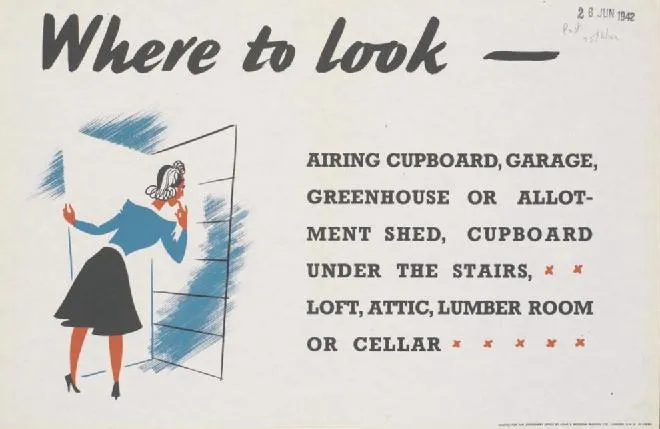
Photo: Unknown (artist), Lowe and Brydone Printers Ltd, London NW10 (printer), Her Majesty's Stationery Office (publisher/sponsor), Public domain, via Wikimedia Commons
The airing cupboard is one of those spaces that everyone uses and almost nobody plans. It swallows spare towels, bed linen, half-empty bottles of bubble bath and the odd bag of Christmas wrapping paper. Then winter arrives, the heating goes on, and the cupboard starts doing something slightly different: it becomes a warm, damp little room with a hot water cylinder in it. That is worth a proper look before the cold weather settles in.
Start with the thing that makes it warm
If you have an older vented hot water cylinder, the cupboard is effectively a heat box. The cylinder should wear a thick, well-fitted jacket with no splits, gaps or sections pulled away. If the jacket is thin, loose or missing, that is lost heat inside a cupboard rather than in your hot water. Pipework should be lagged too, especially the first metre or so from the cylinder. Do not stuff insulation over controls, safety valves or the immersion heater switch.
If you have a modern unvented cylinder, the cupboard may not be especially warm at all. These cylinders are usually factory-insulated, and the space around them should stay clear for servicing and safety. Do not box them in tightly or pile towels against the pipework. The same goes for any boiler or expansion vessel that happens to live nearby: check the manufacturer’s clearance guidance and keep it.
A quick hand test is useful. Run the hot water, then feel the cupboard half an hour later. If it is noticeably warm but the cylinder jacket feels cool in patches, the lagging needs attention. If the cupboard smells hot and dusty, clear the clutter and check that nothing is resting against a heat source.
Ventilation is the bit everyone forgets
An airing cupboard is not a sealed display case. It needs a little air movement, especially if it doubles as a drying space. Many UK cupboards were built with louvre doors or small vents, and those features are there for a reason. If a previous owner has carpeted the inside, sealed the door with draught strips or pushed furniture tight against the outside vents, undo that where you can.
Condensation is the clue. Look for damp patches on the back wall, rusty shelf brackets, musty smells or a slight bloom on stored fabric. Warm, moist air meeting a cold external wall is a classic recipe. If the cupboard backs onto an outside wall, keep stored items a little away from it so air can move. A small dehumidifier can help in a stubborn cupboard, but it is a sticking plaster if the real problem is a blocked vent or a leaking pipe.
Shelving that does not fight the airflow
Solid chipboard shelves look tidy, but they can trap damp air and make the cupboard feel closer than it is. Slatted shelves are better because they let warmth rise and air circulate. If you are replacing shelves, use timber battens fixed into studs where possible, not just into plasterboard. Keep heavy items low. A stack of denim or a full toolbox above head height is an accident waiting to happen.
Leave a hand’s width of clearance around the cylinder and pipework, and do not use the top of a hot cylinder as a shelf. It is tempting, but it is also a good way to block access, trap heat and create a dust trap. Use labelled baskets for smaller items so you are not rummaging past the safety valve every time you need a flannel.
The drying question
Many households use the airing cupboard to finish off washing, especially in winter. That can work, but only if the moisture has somewhere to go. Draping damp clothes directly over the cylinder is not a great idea: it slows drying, blocks access and pushes humidity into the cupboard. A slatted airing rack or a small foldable dryer placed nearby is safer. If the cupboard smells musty after a drying session, stop using it as a dryer until the ventilation is sorted.
If you have an unvented cylinder, be extra careful. The cupboard may not provide the gentle warmth you remember from childhood, and the space around the cylinder should stay clear. In that case, a heated airer or a well-ventilated utility spot is usually the better answer.
Could it become a small utility nook?
If the cupboard is no longer needed for a cylinder — or if you are planning a wider renovation — it can become a genuinely useful nook for cleaning supplies, a charging shelf or a compact laundry station. The design rules are simple: keep electrics away from water and heat, use wipeable finishes, and do not block any service access. A light that actually illuminates the back corner is worth more than another shelf.
A pre-winter checklist
- Check the cylinder jacket and pipe lagging for gaps, splits or loose sections.
- Clear clutter away from the cylinder, controls and safety valves.
- Confirm vents or louvre doors are open and unobstructed.
- Look for damp patches, rust, musty smells or condensation on the back wall.
- Replace solid shelves with slatted ones where practical, and secure them properly.
- Keep heavy items low and leave access to service points.
- Stop drying clothes in the cupboard if it stays damp or smelly.
- If you are considering a utility conversion, plan it around ventilation and safe access first.
The airing cupboard is not just storage. It is a small service space that happens to hold your towels. Treat it like one this winter, and it will be warmer, drier and a lot less annoying to open.