Hot Air: Why Boxing In Your Radiator Is Usually a Bad Trade
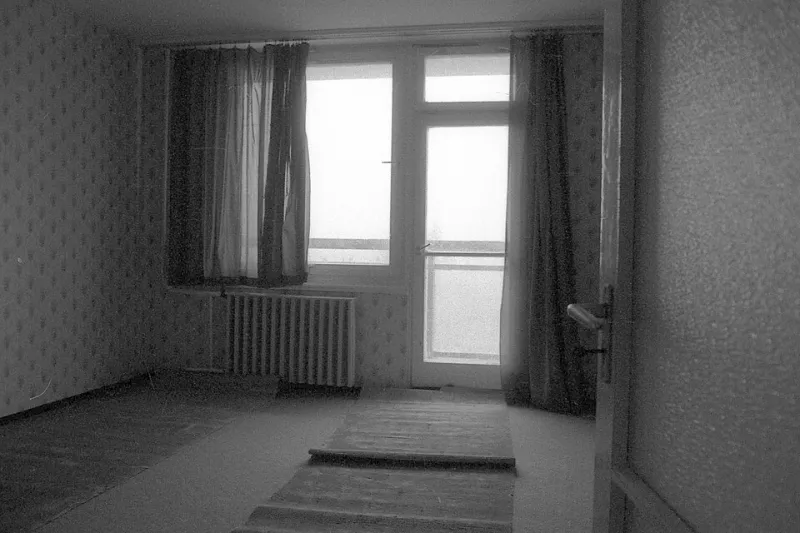
Photo: FOTO:Fortepan — ID 9564: Adományozó/Donor: Kováts Lajos. archive copy at the Wayback Machine, CC BY-SA 3.0, via Wikimedia Commons
There is a particular kind of British compromise that goes like this: the radiator is ugly, so we build a wooden box around it. The box has a nice slatted top, it matches the skirting, and it hides the thing we don't want to look at.
It also blocks most of the heat. And then we turn the thermostat up, and wonder why the back bedroom never gets warm.
This isn't a rant against nice-looking rooms. It's an argument that radiators are part of the architecture, not furniture to be styled around — and that treating them as an obstacle tends to cost you comfort, money, or both.
What a cover actually does to the heat
A radiator works mostly by convection. Cool air enters at the bottom, warms against the hot panels, rises out of the top and circulates around the room. Roughly speaking, the more unobstructed the top and bottom of the radiator, the better the room heats.
Put a cabinet around it and you've done two unhelpful things at once. You've restricted the airflow, and you've trapped hot air in a pocket that then warms the inside of the cabinet rather than your sofa. A well-vented cover with a generous slatted top and open base is far better than a solid box — but it's still a compromise, and it's still typically a 10–20% hit on output in the immediate zone.
Which is fine if your radiator is oversized. It's not fine if it was barely keeping up in January.
The curtain problem
Here's a scenario that plays out in thousands of Victorian terraces: heavy full-length curtains, hung on a pole just above the window, falling to the floor and draping neatly over the radiator beneath the sill.
The room looks lovely. The radiator is now heating a curtain.
If you can't shorten the curtains, at least make sure they're not sitting directly on the radiator and that there's a gap at the bottom so warm air can escape. A slightly-too-long curtain tucked behind a radiator is a damp curtain, and a damp curtain means a cold window and a mould risk on the reveal.
Better options, in rough order of preference: shorten to just below the sill; hang the pole wider so curtains stack off the radiator; or use a radiator shelf to deflect heat into the room.
Sofas, beds and the two-inch rule
The other great British habit is putting furniture across the heat source. A sofa pushed hard against a radiator will block the convection current, cook the back of the sofa, and leave the middle of the room cold.
You want at least 100mm of clear air above and below the radiator, and ideally a good 200–300mm of gap before a sofa or chair. It sounds fussy; it's the difference between a room that heats in twenty minutes and one that heats in an hour.
TRVs: the bit everyone ignores
Thermostatic radiator valves are the cheapest comfort upgrade in the house, and most people never touch them.
A few practical points:
- Don't put a TRV behind a curtain or inside a cabinet. It reads the temperature of its little pocket, not the room, so it will keep heating long after the room is warm.
- Keep one radiator without a TRV — usually the hallway or bathroom — so there's always somewhere for the system to dump heat.
- Set bedrooms lower than living rooms. 18°C upstairs and 20–21°C downstairs is a sensible starting point.
- If a TRV is stuck, a gentle tap on the pin often frees it. Don't force it.
A cover or a curtain turning a TRV into a liar is the most common reason a room "never heats properly" when nothing is actually broken.
Period properties are their own genre
In an older house, radiators are often bolted onto walls that weren't designed for them, under windows that leak a bit, in rooms with 2.6m ceilings and no insulation to speak of. A 600×1000mm single-panel radiator in a big Victorian front room is optimistic at best.
In those rooms, the answer is usually not a cover. It's either a larger radiator, a different type (double-panel, or a vertical designer model where wall space is tight), or accepting that the room needs supplementary heat. Deep window reveals in a solid-walled cottage are another classic: the radiator sits in the coldest part of the room, right under the glass.
When a "feature" radiator earns its keep
Column radiators, vertical panels and cast-iron reproductions are genuinely useful in period homes — not just for looks, but because they can be sized properly for the room and placed where the heat will actually travel. A tall vertical model in a narrow hallway or a bathroom with no wall space is a sensible solution, not a vanity purchase.
Be sceptical of anything described as a "designer radiator" that comes with a quoted output far higher than its physical size suggests. Ask for the output at 75/65/20 (the standard test condition) and compare like for like. If a showroom can't tell you the output, walk away.
Should you move it?
Moving a radiator is disruptive but not always complicated. It's worth doing when:
- The radiator is directly behind where the sofa, bed or desk has to go.
- It's under a window with heavy curtains and no alternative wall.
- The room has been reconfigured and the heat is now in the wrong place.
- You're already having plumbing or flooring work done.
It's usually not worth it just to get the radiator onto a more photogenic wall. A heating engineer will need to drain down, extend or reroute pipework, and make good — and on a sealed system with a combi boiler, that's a day's work and a few hundred pounds before you've even touched the decorating.
A checklist for looking better without getting colder
- Measure the radiator's output before you buy a cover. If it's marginal, don't cover it.
- Choose slatted tops and open bases if you must box it in.
- Keep 100mm clear above and below, and 200mm+ from soft furniture.
- Take curtains off the radiator — shorten, widen or tie back.
- Check TRVs aren't hidden behind curtains or inside cabinets.
- Add a reflective foil panel behind radiators on external walls. Cheap, invisible, and it works.
- Bleed radiators at the start of the heating season, before you blame the boiler.
- If a room is still cold after all that, get the system balanced before you buy a bigger radiator.
Radiators aren't furniture. They're the working end of a system, and they only perform when you let them breathe. Hide them if you must — but do it with your eyes open about what you're paying for.