Plaster Last, Decisions First: A Whole-House Renovation Order That Saves You a Second Skip
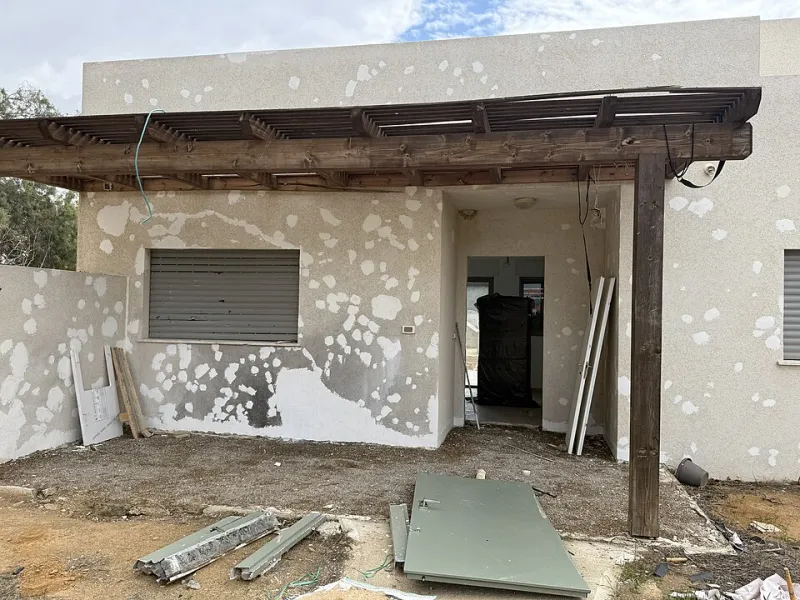
Photo: שלמה רודד, CC BY 2.5, via Wikimedia Commons
You can have impeccable taste and still end up paying for the same wall twice. Whole-house renovations rarely collapse because someone picked the wrong off-white; they collapse because the plaster went on before the electrician had finished, or the kitchen landed before the screed had cured. Sequencing is the unglamorous bit that decides whether your contingency buys a decent tap or a second skip.
What follows is the order most UK projects settle into once the moodboard is put away. It isn't a law of physics — every house has its own opinions — but it's a dependable spine to plan around.
Before anyone lifts a hammer
Three things need to be settled before the first skip is booked, because they change everything downstream.
- The survey and the structure. If you're removing walls, widening openings or adding a rear extension, you need a structural engineer's calculations and Building Control on board early. Party Wall awards, if you share a wall with a neighbour, take weeks — start them now, not in week six.
- The services strategy. Where does the boiler go? Is the consumer unit moving? Are you keeping the old radiator positions or switching to underfloor heating? A rewire and a replumb cost roughly the same whether you do them at the start or halfway through, except halfway through means new plaster comes off again.
- A single decision log. One spreadsheet, one owner, one place where the kitchen supplier, the tiler and the electrician's assumptions are written down. Most sequencing disasters are really communication disasters.
Also worth doing now: a full damp and ventilation review. Discovering a cold bridge or a blocked airbrick after the kitchen is fitted is the definition of doing a job twice.
Phase one: strip out, structure and the things you'll bury
The first phase is demolition, then anything that lives inside a wall, floor or ceiling. In practice:
- Strip out, with asbestos checked first in anything pre-2000.
- Structural work — steels, lintels, new openings, floor repairs.
- Roof work, chimney work and any external drainage.
- Windows and doors (FENSA or Certass certification kept for the eventual sale).
- First-fix electrics, plumbing, heating pipework, drainage runs and any mechanical ventilation ducting.
- Insulation, then airtightness measures if you're going that far.
This is the phase where the house looks worse than it ever will again, and where the temptation to 'just get the plastering done so it feels like progress' is strongest. Resist it. Plaster is a finish. It goes on when the things behind it are finished, tested and signed off.
One practical note: Building Control want to see certain work before it's covered — steelwork, floor insulation, drainage, some ventilation. Book those inspections into the programme rather than discovering them the day before the plasterer arrives.
Phase two: the shell
Now the house becomes a series of smooth surfaces. Plasterboard, skim, screed, tanking in wet areas, and time. New plaster wants four to six weeks to dry properly before you paint it; a sand-and-cement screed needs its own curing period before underfloor heating is commissioned or a floor goes down on top. This is dead time, and it is not wasted time.
It's also the moment to get the decorative decisions locked: tile layouts, kitchen elevation drawings, socket positions confirmed against the actual furniture you own.
Where to build the liveable phase
Most UK households can't move out for eight months, so plan the phasing rather than hoping. The usual approach is to work upwards or outwards: finish one habitable zone — a bedroom, a bathroom, a working kitchen corner — and protect it with dust sheets and a zip door while the rest is a building site.
Two things make this bearable:
- A working bathroom and a kettle early. Get one bathroom fully functional before starting the next, and set up a temporary kitchen with a microwave, kettle and washing-up bowl in a room you're not touching.
- A hard rule about the finished zone. Nothing stored in it, no tools dumped in it, and a proper door seal on the dust barrier. One careless afternoon with a chop saw undoes the psychological benefit of having one calm room.
Phase three: second fix and the irreversible stuff
Second fix means the things that plug into the first fix: sockets and switches, radiators, sanitaryware, kitchen carcasses, extract fans. After that come the surfaces you can't easily undo: tiling, kitchen worktops, flooring, then decoration.
Floors deserve their own warning. Engineered oak, LVT and tile all want a flat, dry, clean substrate, and they all want to go in after the wet trades have finished but before the heavy kitchen units are finally sealed in. Get the order wrong and you'll be cutting a floor around a cabinet run, or lifting a finished floor to get a washing machine out.
New plaster needs a mist coat — watered-down emulsion — before any colour goes on, or your expensive paint will peel off in sheets.
The jobs that punish you for doing twice
A short, unsentimental list of things worth paying to get right first time:
- Plaster and skim (the second version is never quite as flat).
- Screed and floor build-up.
- Tanking and wet-room waterproofing.
- Kitchen services positions.
- Window and door openings.
- Any ducting you intend to hide.
Conversely, decoration, furniture and lighting are genuinely forgiving. If money is tight, defer these and protect the sequencing.
Hold back a real contingency
On a whole-house job, a 10 to 15 per cent contingency isn't pessimism, it's arithmetic. The money you save by getting the order right is the money that covers the rotten joist nobody expected. Skipping the resequencing is how people end up with a beautiful front room, no working shower and a loan.
Your next step
Before you book a skip licence from the council, write the order of works on one page, in plain English, and make every trade read it. If a supplier can't tell you when their product needs to arrive relative to plaster, screed and paint, that's your cue to ask harder questions — not to guess.